Connect with us

Reviews/Commentaries

News5 finally grabs attention with Atty. Mel Sta. Maria’s interview with PNoy

Sta. Maria’s one-on-one with the president was straightforward, intelligently-done, and most importantly, answered many of our questions.
Published

on

Karen Adiova

Sometimes an interview can bore viewers because it’s either too long or the questions being asked by the interviewer appear too repetitive. It can also turn you off when the interviewer tries so hard to grab a gotcha soundbite from the interviewee.

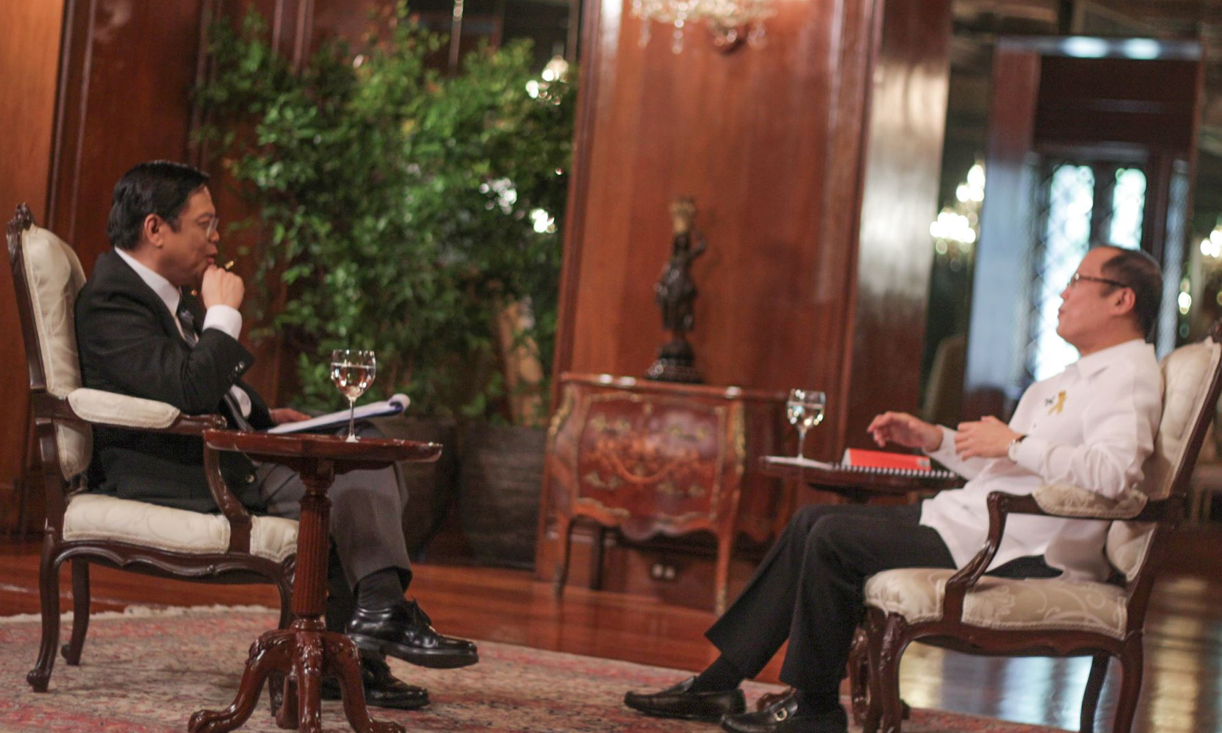
Fortunately for Sunday’s interview with President Noynoy Aquino, interviewer Mel Sta. Maria didn’t face any of those problems. His one-on-one with the president was straightforward, intelligently-done, and most importantly, answered many of our questions.

Whether you’re a pro or anti-administration, no one can argue with the fact that this interview was new and novel, like how it revealed that the president is open to the amendment of the 1987 Constitution, or what they call the Cory Constutition.

“Ang Senado po ay natapos na nila ang kanilang pagbabalangkas sa bersyon nila. Ang Malacañang naman po ay nag-sumite na rin ng kanilang bersyon. Ito pong Mababang Kapulungan medyo nababagalan sa iba’t ibang mga kadahilanan. Papaano po natin mapapabilis iyon?” asked Sta. Maria. “Yung inyong moral persuasion ay ginagamit niyo ba para itong ating mga tao sa Mababang Kapulungan ay bilis-bilisan naman?”

Sta. Maria also asked PNoy about his proudest moment yet as the leader of the country, given the many challenges he faced the past few years. “Hindi ko kasi pinapananawan na ginawa ko e. Parati kong sinasabi ginawi natin, ano,” Aquino said, then boasting about his administration’s actions pre-Yolanda.

“Mamili kayong krisis: Zamboanga, ‘yung Bohol. Paano nakakakilos ang gobyerno; paanong naagapan hindi parang napapadapa, na hindi malaman kung paano susolusyunan ito,” he said.

(Read full transcript of the interview here)

The interview won’t likely change the minds of Aquino critics, but for TV5, it finally gave them a rush of positive attention following the launch of the widely mocked Aksyon-branded programs and Paolo Bediones’ sex video scandal.

It was their biggest “get” yet this year — their 2nd interview with PNoy since 2010 with Jove Francisco — and it showed why executives should invest more in newsier content than flawed tabloid reporting, i.e. Aksyon sa Tanghali’s “Barangay Singko” segment.

Notwithstanding the fact that the administration appreciates Sta. Maria’s smart analysis on issues, we can fully understand why they agreed to talk to him. Sta. Maria has always projected that “easy-to-approach” image and he’s always fair unlike some of his TV5 colleagues.

Throughout the interview, he appeared curious, pressing at times, but sympathetic and non-threatening which helped him in getting to know the president a little bit better. His skill set as a lawyer also served as an advantage, especially when discussing technical jargons which some of the viewers aren’t familiar with.

After this interview, Sta. Maria is likely to get more name recognition and respect he so rightfully deserves.

Memo to Manny Pangilinan and Noel Lorenzana: Give him what he needs to sign another contract with TV5. Give him more airtime and his own national platform — perhaps his own show where he can show us what he is capable of doing, as seen in this PNoy interview. We need more people like him on TV, especially on TV5. Who knows? He could be the answer to your ratings and credibility problems.

What do you think about this TV interview? Post your comments below.

Advertisement

GMA News and Public Affairs

Dear GMA-7, it’s time for a TV debate

GMA-7 has long said it’s committed to “Serbisyong Totoo.” Now is the time to show that those words still hold weight.

Published

on

Bilyonaryo News Channel/Toni Talks

We are less than a month away from the midterm elections, and while the spotlight remains on who will make it to the Senate’s “Magic 12,” one local contest demands urgent public attention — the battle for the mayoralty of Manila.

In the country’s capital, there’s now a three-way race between incumbent Mayor Honey Lacuna, her predecessor Isko Moreno Domagoso, and businessman-turned-lawmaker Sam Verzosa. The latest survey by the RPMD Foundation shows Domagoso leading with 45 percent, with Verzosa closing in at 38 percent, and Lacuna trailing with just 15 percent.

That close margin tells us one thing: Manileños deserve to see them in a debate.

With the city at a turning point, voters need more than short video clips and soundbites — they need to see their candidates answer tough questions, talk about their records and accomplishments, and present clear visions for Manila’s future.

Right now, they are not getting that. Manileños see these candidates holding campaign sorties, often streamed live on Facebook and YouTube, or sitting for TV interviews — but those just aren’t enough. Interviews, in particular, can be easily skipped or avoided, as Moreno did when he declined ABS-CBN’s invitation for their “Biyaheng City Hall” series. In the end, it’s the voters who lose. A structured, televised public debate is where real leadership is tested — just like in the Comelec-organized presidential debates we’ve seen in the past.

Without a proper platform like a debate, the candidates’ messages are getting mixed up. Verzosa is now getting attention by criticizing how things have been run in the city by past administrations and calling for change with his slogan, “Bago Naman.” Domagoso wants a political comeback after losing in the 2022 presidential race. Lacuna, meanwhile, is hoping to retain her seat as the city’s first female mayor.

These are all important stories, but they’re happening separately and without real discussions. Voters are left to figure things out from news quotes and online posts. That’s not how it should be.

Manila is a city with complex issues: urban poverty, security, infrastructure decay, looming debt, and more. The next mayor needs to be ready to take all that on, and voters need the chance to scrutinize who’s truly up for the job.

In past election cycles, debate specials like Umagang Kay Ganda’s “Umagang Harapan” and Unang Hirit’s “Hiritan” provided that. Today, with ABS-CBN off the air, and GMA-7 standing as the sole mainstream network with mass reach and influence, the responsibility falls squarely on their shoulders.

A one-time TV debate is all it takes — and they can even expand it to multiple editions with candidates from other key cities like Pasig (Vico Sotto vs. Sarah Discaya), Caloocan (Along Malapitan vs. Antonio Trillanes), and Marikina (Stella Quimbo vs. Maan Teodoro), among others.

Domagoso, who returned to TV via GMA-7 after the 2022 elections, is a Sparkle talent. It would be easy to sign him up for a debate. Verzosa, a blocktimer on the Kapuso Network, has already expressed his willingness to participate. Lacuna, for her part, has been making the media rounds in recent weeks, from one-on-one with actress-TV host Toni Gonzaga to a sit-down with broadcaster Anthony Taberna. Logistically, this is doable — and more than doable, this is necessary.

GMA-7 has long said it’s committed to “Serbisyong Totoo.” Now is the time to show that those words still hold weight. The network has the platform, the reach, and the resources to do it. Now, it just needs to act. Give voters the chance to hear directly from the candidates — side by side, face to face, live, maybe with a true-blue Manileño moderating it: Arnold Clavio.

This race in Manila is close. The issues are serious. A debate wouldn’t just help — it’s the least that a network with a franchise can do. Don’t let us down, GMA-7.

Continue Reading

Reviews/Commentaries

TV5 hires Jiggy Manicad – but why?

In light of his hiring, we ask the powers that be at the Kapatid Network: why was this necessary?

Published

on

TV5

One major angle missing from the news items about Jiggy Manicad’s hiring as a TV5 anchor was his failed Senate run in 2019. Granted, he wasn’t the first journalist to attempt a career in politics – his former Reporter’s Notebook co-host Maki Pulido and Winnie Monsod are examples – but Manicad’s case is more problematic, and that’s why we are writing this.

Why this is an issue that needs to be highlighted and must not go under the radar is because Manicad, formerly of GMA-7, will soon become a primetime news anchor at the Kapatid Network – and this is simply troubling given his history.

It was only four years ago when Manicad ran for the Senate, vying as an independent candidate. One might assume that this choice would signify his independence and resistance to conforming to the status quo. However, this wasn’t the case. Backed by then-Davao Mayor Sara Duterte’s Hugpong ng Pagbabago party, Manicad campaign was marred with negative press due to his questionable behavior and stance on the issues.

Motivated by an ambition to win, Manicad made concerted efforts to appeal to President Rodrigo Duterte’s base, the DDS, agreeing with most of his key policies and talking points, including federalism, lowering the age of criminal responsibility, and the issue of EJKs or extrajudicial killings brought by his bloody war on drugs.

In the process, Manicad underwent a notable transformation during the campaign period, morphing into a “trapo” or political butterfly, one who would do anything and say anything just to win an election.

What’s worse, Manicad also took a blind eye and acted as a denier when asked about Mr. Duterte’s persistent and often uncontrollable attacks on the press, asserting that there was no atmosphere of fear during his administration.

When asked by The Chiefs, for example, to comment on the cases filed by the government back then against a media colleague, Rappler CEO Maria Ressa, Manicad also bought Mr. Duterte’s hook, line and sinker, saying that there was a clear basis for these cases, as he believed she and her online news website violated the constitution. (It’s worth noting that Ressa has since been cleared of multiple tax evasion cases.)

Manicad, of course, drew widespread backlash after that, with his statements either being made fun of or loathed by his colleagues in the media, including this very own website.

By all measures, Manicad’s actions and behavior during that election had compromised his journalistic integrity, and GMA-7’s lack of interest to put him back on the air was a clear indication of that.

And this is why we should ask TV5: why was his hiring necessary? Why did they choose someone with a history of betraying his profession? Given his record, how can he now portray himself as an unbiased newsman, someone who’s, to borrow his old network’s slogan, “Walang kinikilingan, walang pinoprotektahan,” when we all know where he stands and whom he allied himself with?

But Luchi Cruz-Valdes and her team seemed to have shrugged off these concerns when they appointed him as the third co-anchor of Frontline and gave him a lucrative exclusive network contract.

“Jiggy is a face of news, and we need more faces in news, and we’re so happy that we finally got a face that finally packs in all the punch we need…para maipakita natin sa mga manonood natin na seryoso tayo sa paghatid ng mga balitang kumpleto ano, kumpletos rekados, malalim at mabilis ang pagkuha. Dyaan kilala si Jiggy eh,” she said during his contract signing earlier this week.

Cruz-Valdes, for all her accomplishments as a journalist, doesn’t have a good track record when it comes to helming a news organization. This is certainly just another good example.

Inside TV5 and even Cignal TV, we are hearing disapproval over Manicad’s move to the MediaQuest family, with some questioning why the management had to do this.

“Hindi ba sila tiwala na kaya ni Julius at Cheryl sa primetime at tumataas na ratings?” asked one TV5er who spoke to us on condition of anonymity.

Another said, “Madaming magagaling at matagal na dito na beterano at walang bahid ng pulitika. Hindi namin maintindihan kung bakit kailangan namin siya. Maraming dapat unahin dito.”

If the original plan pushes through, Cruz-Valdes will officially be retiring sometime in 2024, ending what has been a tumultuous run at TV5. If this is what she thought would bring in more viewers to Frontline, or be her legacy, it appears that she has fallen short on both counts.

As for Manicad, it might be the opportune time for him to reinvent himself and assure the public that he won’t exploit this new role to advance his future political agendas or protect his allies in the government. All eyes will be watching him.

Continue Reading

Reviews/Commentaries

One News’ ‘The Chiefs’ brings smart conversations back to primetime TV

An ambitious old-school talk show that puts together all the heads of the MVP media properties in one table.

Published

on

One News

Exactly three months since its initial launch, you may be wondering how One News is doing in the news business. More importantly, you may be asking, what does the Cignal news channel has to offer that can convince you to subscribe to Cignal TV, or switch from SkyCable to Cignal?

One of its programs may be the answer to both of these questions: The Chiefs, the one-hour nightly talk program hosted by Ed Lingao, Roby Alampay and Ana Marie “Amy” Pamintuan.

The Chiefs is no different from other talk programs on TV today. Its format actually resembles ANC’s Headstart, CNN Philippines’ The Source and GMA News TV’s Bawal Ang Pasaway Kay Mareng Winnie. But what makes it revolutionary, not to mention ambitious, is that it puts together all the heads of the MVP media properties in one table — a concept that we only or usually see during major news events.

Also on the plus side, The Chiefs occupies the primetime slot, airing right after One News’ flagship newscast The Big Story — signaling its importance to the channel and the MVP group.

Now this is a brilliant move. A regular primetime talk program hasn’t been done since Q11’s Tonight with Arnold Clavio in 2010. (Of course we are talking about a different program here as TWAC back then was news oriented.) By airing regularly on a nightly basis, The Chiefs can not only chase the headlines, but also set the news agenda for the following day.

The initial result proved this point when its interview with ousted Chief Justice Maria Lourdes Sereno made the news shortly after its airing. In it, Sereno revealed that the Duterte administration continues to persecute her, with the Bureau of Internal Review (BIR) launching an “illegal” investigation against her.

Also in July, the program scored one of its biggest interviews to date when it had Julio Teehankee, the chairman of the Consultative Committee’s sub-committee on political reforms. During an exchange with the hosts, Teehankee revealed something that would change the course of the charter change campaign: that President Rodrigo Duterte can run again under the proposed federal form of government.

He has since clarified that he “misspoke” in the interview, but the damage to the campaign was already done as constitutionalists and ordinary citizens began to question whether this is really being proposed for the good of the people, or the good of the president and his agenda.

Another episode that drew headlines was the program’s interview with NEDA Secretary Ernesto Pernia. It happened just days before President Duterte’s third State of the Nation Address (SONA), so as expected, the subject of federalism would be brought to the discussion. Pernia, surprisingly, sounded the alarm on its possible effects on the country’s economy, saying that a shift to it will “wreak havoc.”

“It’s unlikely that the regions will be ready. Our concern, my concern, is that we are moving to connect the regions, to bring the lagging regions into the mainstream economy. That momentum of infrastructure improvement in the regions is going to be disrupted,” Pernia said.

The exclusive interview would later become front page news — at it should be given that it was a clear deviation from the administration’s official line — and it would also be picked up by various news outlets including ABS-CBN, Rappler and Philippine Daily Inquirer. Talk about making the news!

Chief Presidential Adviser Salvador “Sal” Panelo also didn’t leave unchallenged when the program had him in June to talk about the administration’s crackdown on idlers or tambays, among many other things. As what we have seen in his previous television interviews, Panelo is not someone to be taken with kid gloves. The man is skillful enough to answer even the toughest of questions. He has also mastered the art of political spinning, reason why interviewers like Karen Davila and Winnie Monsod had to be extra challenging in order to disallow him from twisting facts (see Davila’s interview with him last year).

“You know, crimes arise from those situations and I think the president is precisely doing his work as a father of the nation, with respect to the manners of a parent. He’s just doing his job,” Panelo said when asked about the anti-loitering drive.

“But, Sir, isn’t that a dangerous proposition that this is the root of all crimes, the tambays who loiter around?” asked Lingao.

Alampay then went on and gave a pretty good argument: “It (the campaign) may even be the popular sentiment, but when we talk about rights — civil rights, political rights, human rights — aren’t we talking about numbers and majority sentiment, rather we are precisely talking about the possibility that there will be one policeman who does not understand [the campaign], and acts purely on the say so of having heard this from the president on television and goes out and interpreted it that way?”

“This president is a lawyer and very, very serious about obedience to the law,” Panelo answered, to which Pamintuan wittingly responded, “Well, the president also said recently na ‘Napakagagago naman ng mga ito.’ His order was to accost, not to arrest,” referring to Duterte’s statement that he ordered the police to only accost and not arrest tambays.

To be clear, not all of the already-aired episodes were must-see TV. There were few uninteresting guests along the way and discussions that would’ve turned out to be more fascinating had the hosts asked more follow-up questions.

Case in point: Senator JV Ejercito’s assertion that the killings of two town mayors in July were probably orchestrated to destabilize the Duterte administration should’ve been challenged. Perhaps a good question is why did the good senator buy the Duterte propagandists’ playbook hook, line and sinker? Just imagine how it would’ve made the news the following day.

Nitpicking aside, the production team deserves to be commended for always coming up with topics that Filipino viewers should know, like federalism, which to our estimate already totaled to 7 episodes, or the state of Philippine education. There were also long-form discussions on the peace talk, the healthcare system in the country, and same sex marriage, just to name a few.

Other noteworthy episodes that really showcased the strength of the program and its hosts were the roundtable discussion on the VP electoral protest with Atty. Romulo Macalintal and Atty. Glenn Chong as featured guests, the live post-SONA broadcast, which featured multiple guests like Atty. Mel Sta. Maria and Atty. Bruce Rivera, and the exit interview with now-former Ombudsman Conchita Carpio-Morales.

Ultimately, it’s not difficult to root for One News. The news channel sure has a noble intention and we could see that not only in The Chiefs, but also in other programs like Agenda and Convo.

It also has a team of solid journalists and broadcasters — albeit minuscule when compared to ANC — who have earned our respect over years. Aside from the trio of Lingao, Alampay and Pamintuan, there’s also Cheche Lazaro, Tony Abad and Cito Beltran, as well as new promising talents like Danie Laurel, JP Ong and Bim Santos. Behind the scenes, there’s also Jove Francisco as showrunner of The Chiefs — an assurance that viewers will get quality journalism and storytelling above anything else.

As what a cable news veteran once said, “Good journalism, good television, can make our world a better place.” Here’s hoping that One News will be that force for good.

Continue Reading

Stories you might have missed